


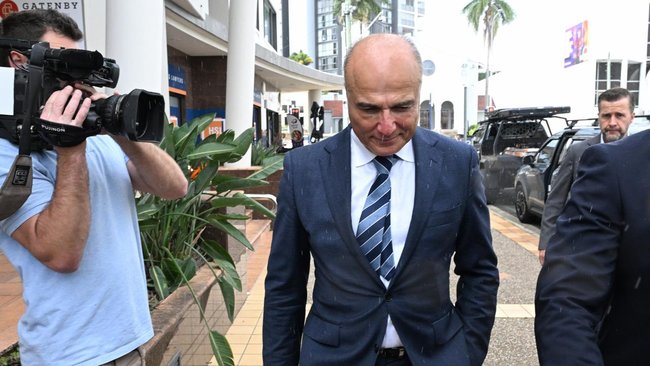
A coroner has found the death of a patient of suspended prominent surgeon Dr Reza Adib was likely preventable after she was discharged from hospital following weight-loss surgery.
In a 49-page finding handed down on Tuesday, Queensland Deputy State Coroner Stephanie Gallagher found 62-year-old Gold Coast grandmother Rosemarie Campbell died from complications following a gastric bypass procedure performed by Adib at Brisbane’s Wesley Hospital in February 2022.
WATCH THE VIDEO ABOVE: Prominent suspended weight-loss surgeon slammed over patient death
Know the news with the 7NEWS app: Download today
The coroner found Campbell developed acute bacterial peritonitis and pneumonia after surgery and concluded she was discharged despite ongoing vomiting and signs warranting greater caution.
Gallagher found Adib approved Campbell’s discharge after discussions with nursing staff and should have personally assessed Campbell rather than relying on over-the-phone updates.
The coroner found she may still be alive had she not been discharged from hospital days after the procedure.

Campbell had first undergone weight-loss surgery with Adib in 2020, reducing her weight from 130kg to 87kg.
Nearly two years later, she contacted the surgeon complaining of reflux symptoms and was subsequently booked for a gastric bypass.
The findings state the second operation was discussed following a phone call between doctor and patient and performed just 10 days after a formal consultation.
“I consider the surgery was rushed,” Gallagher wrote. “It was not urgent, in a clinical sense.”
The coroner found Campbell had not been properly informed before proceeding and questioned why alternative investigations, medication management and other treatment options were not more fully explored before the gastric bypass was undertaken.
“The path to surgery was unnecessarily rushed,” Gallagher wrote.
Gallagher also raised concerns about Adib’s testimony and record-keeping.
“I accept Counsel Assisting’s submissions that I should have concern about both the credibility and reliability of Adib’s evidence and his records,” she wrote.
“His evidence needs to be approached with caution.”
The coroner found Adib’s credibility was “seriously undermined” by a letter he wrote supporting Campbell’s application for early access to superannuation to fund the gastric bypass procedure.
In the letter, Adib described Campbell’s obesity as a life-threatening condition and at the high-risk end of the morbidly obese scale.
Gallagher found those claims were inconsistent with the medical evidence and noted Adib later conceded Campbell’s obesity was not life-threatening and was not as severe as described in the document.
“I would accept that Adib knew the falsity of it when he signed it,” Gallagher found.
“If falsehoods had to be offered to secure the funding, then it does not seem that the critical need for the surgery, as expressed in the superannuation application, actually existed.”


The coroner said the letter was, “in most material respects,” untrue and found it significantly damaged Adib’s credibility while raising concerns about the reliability of his records.
Gallagher was also critical of Adib’s record-keeping, finding some consultations had little or no meaningful documentation and expressing concern about the use of pre-filled templates and records not accurately reflecting what had occurred.
The coroner found Adib’s notes said there had been a lengthy discussion with Campbell about the risks and benefits of surgery, but that was not reflected elsewhere in his records.
She also found significant events during the operation were missing from the operative record, while details generated by pre-filled forms appeared despite not having happened.
She found Adib had engaged in “deliberate and substantial exaggeration” about the care provided to Campbell and said his conduct reflected a “disturbing tendency” to exaggerate matters relating to his surgical practice.
Adib told the coroner Campbell had undergone extensive preparation by a team including psychologists, dietitians and nurse practitioners before booking in for the gastric bypass.
The coroner found there was no psychologist involved, she had only one phone appointment with a dietitian and was seen by a nurse when admitted for surgery.
Gallagher concluded there had been “considerable carelessness and indeed deception” in the way Adib arranged and documented the procedure.
She also found a Medicare billing code had been recorded for clinically severe obesity, despite Campbell not meeting that definition at the time.

The findings come days after Adib’s medical registration was suspended by the Medical Board of Australia after he was charged with rape over an unrelated matter.
Adib, who is the partner of former Queensland premier Annastacia Palaszczuk, has publicly indicated he intends to fight the allegation.
The matter has not yet been heard in court.
Gallagher made no formal recommendations, noting the Wesley Hospital had already implemented improvements to discharge procedures since Campbell’s death, including changes to discharge criteria and clinical processes.